Not-For-Profit Accounting Rotating Header Image

Restrictions

The Funder is Not the Program

monryshirtWhen I work with nonprofits I will often hear them talk about their [insert name of funder] program.  I always cringe a little at this because  it means they are sliding into thinking of the funder and the program as one in the same.

They are not.

I can see how this thinking has evolved in the sector.  Someone has a great idea for a program and they look for funding.  A particular foundation loves the idea and gives them a grant.  It then can be easy to associate the two things as one.  But I repeat here the mantra I was taught: “The funder is not the program.”  What happens if that big funder decides to stop giving money to that program?  Does it end?  Probably not.  The nonprofit will seek additional sources of income.  But the program could suffer if there is an interruption of funding and the nonprofit does not have some other way to keep money flowing into it.

(more…)

What I Learned From the IRS, Part 1

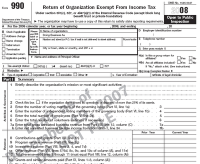
No longer in draft form!Questions and Answers from the latest New Form 990 training I did:

For calculating our total assets to determine which form we use, do we exclude property, plant and equipment?

Nope, you use total assets for figuring out which form, either the 990, 990 EZ or the 990 N, to fill out.

When filling out the functional expense section and calculating the advertising expenses, do we include money we spent to advertise open positions within the organization?

Not as I read the instructions.  Here is what it says for line 12 in part IX:

Advertising expenses. Enter amounts paid for advertising. Include amounts for print and electronic media advertising. Also include Internet site link costs, signage costs, and advertising costs for the organization’s in-house fundraising campaigns. Do not include fees paid to independent contractors for conducting professional fundraising services or campaigns (these amounts must be reported on line 11e).

With the economic downturn and the decreased value of endowments and reserves, will more organizations be filling out Schedule N of the form 990?

(more…)

Some Questions and Answers

Questions?What would be the accounting transaction recorded by a 501(c)3 organization for a permanently restricted donation received?

The particulars will depend on what accounting software you are using. Basically you would debit cash or receivables (depending on if you got the money or just a letter saying you were getting the money) and credit an income account. If you are using QuickBooks you also would code the income to a ‘class’ that is called something like ‘permanently restricted funds’ and to the particular funder (customer / job).

I’m new to a nonprofit board. Big discussion always about the income statement which shows a multi-year grant vs. the expense of that money. Is the income booked in the current fiscal year of receipt and the expense booked in the next fiscal year of expense? Or, are they both booked in the year of expense, which is in this example the next year, and is what I would do in the private sector with a pre-paid item? Is there a difference in the answer depending upon whether the money was received or merely pledged?

Also, can you recommend a good nonprofit accounting starter guide or overview?

First off I’d recommend this book.  Short, easy to read and great basic financial information for nonprofit staff and managers. There are lots of other great books out there but this is always the first place I look when I have a question.

You have touched on one of the big issues of nonprofit accounting. The matching principal in regular accounting gets thrown out the door for the most part. For what you describe above the 100,000 is booked as income for this fiscal year. Next fiscal year will have all the expenses and the nonprofit will need to figure out a way to explain this that will make sense to folks.

One way I recommend adding in an income item in a P&L report called “grant monies released from restriction.” As you do the work that the 100,000 is paying for you can ‘add’ income here to balance the expenses. This addition of income is actually a release of funds from restricted monies to unrestricted monies, not just revenue pulled out of the air.

As for pledge or cash, it matters when you are promised, or pledged the monies. If you get a letter from the funder at the end of this fiscal year awarding you the grant but don’t actually received checks until next FY, it is still considered revenue to the organization when you received that first official notification.

Why Nonprofits Have Profit

Money money moneyA question I received recently is a familiar one:

How can I best explain to a non-accountant how we can have a net profit and retained earnings for a not-for-profit organization?

I think the confusion here lies with the term “not-for-profit.” Charitable / Nonprofit / Not-for-Profit organizations are not organized to make a profit for a group of owners or shareholders. They are organized to *do* some kind of charitable purpose. They are mission-driven organizations, not profit driven.

In order for an organization to do its work and carry out its mission on an ongoing basis it must generate more income than the expenses it incurs. It must make a profit. Any organization, either a for-profit or a nonprofit, that does not take in more money than it spends will fail in the end.

The net profits of the charitable organization are retained by the nonprofit and used to further its mission by expanding programs, hiring additional staff, training staff, upgrading equipment or even creating a reserve account. The net profits of a charity are not distributed to the owners as they would be in a for-profit business.

Does that help?

Better Tag Cloud